

There is a particular feeling that the best homes have — and it is almost impossible to describe without resorting to metaphor. A sense of calm that isn't emptiness. A sense of warmth that isn't clutter. A space that feels considered, unhurried, and alive with quiet texture. A space that, the moment you walk into it, makes you exhale.
That feeling has a name in 2026. Interior designers, trend forecasters and the most influential interiors publications are converging on the same term for it: organic minimalism. And while trends come and go with reliable frequency, this one feels less like a seasonal mood board and more like a genuine shift in how we want to live — a response to screens, speed and the particular exhaustion of modern life.
Here is what it actually means, why it has resonated so powerfully right now, and — most importantly — how to bring it into your own home in a way that feels authentic rather than aspirational.

What Is Organic Minimalism?
Organic minimalism is an interior design approach that combines the restraint and intentionality of minimalism with the warmth, texture and natural sensitivity of organic design. It is, in the simplest possible terms, minimalism that breathes.
Where traditional minimalism sought to strip spaces back to pure function — white walls, empty surfaces, rigidly geometric forms — organic minimalism asks a different question: what if a room could feel calm and abundant at the same time? What if restraint didn't mean coldness? What if the things you kept in a space were few, but each one was so materially rich, so visually interesting, so deeply considered, that you never missed what wasn't there?
The answer to those questions is what an organic minimalist home looks like. Warm stone tones and raw linen instead of clinical white. Handcrafted ceramics and textured plaster instead of flat, smooth surfaces. Furniture with rounded, organic silhouettes that feel as though they belong to the natural world. A few objects chosen for their beauty and their material honesty, given space to breathe. Natural light, treated as the most important element in the room.
"Organic minimalism is the interiors philosophy that says: own less, but make everything you own genuinely extraordinary."
It is a fundamentally anti-anxiety approach to decorating. Every decision is guided by the question of whether something adds genuine beauty, genuine function, or genuine calm — and if the answer is no to all three, it probably doesn't belong in the room.
Organic Minimalism vs Cold Minimalism: What's the Difference?
The distinction matters, because the two approaches produce fundamentally different results — and understanding the difference is what allows you to pursue the warmth of the first without accidentally arriving at the sterility of the second.
| Cold minimalism | Organic minimalism |
|---|---|
| White, grey and stark neutral palette | Warm earth tones — stone, clay, sand, chalk, linen |
| Smooth, hard, reflective surfaces throughout | Textural surfaces: plaster, raw wood, woven fibre, matte stone |
| Geometric, angular, rectilinear forms | Organic, rounded, softly curved forms that echo nature |
| Empty surfaces — nothing that isn't purely functional | Intentional objects — few, but each one beautiful and meaningful |
| Absence of the natural world | Nature present throughout: plants, stone, wood, dried botanicals |
| Feels like a gallery or a hotel lobby | Feels like a home that someone genuinely lives in and loves |
| Uniform artificial lighting | Natural light maximised; warm ambient pools in the evening |
The critical difference is warmth — not warmth of temperature, but warmth of material, warmth of light, warmth of intention. Cold minimalism is an aesthetic. Organic minimalism is a feeling.
The Five Defining Traits of an Organic Minimalist Home
Organic minimalism is recognisable across very different spaces — from a pared-back studio flat to a generously proportioned country house — because it shares five consistent characteristics regardless of scale or setting.
Restraint with intention
Every object in the space has been chosen deliberately. Nothing is there by default, by accident, or because it was simply never removed. The result is a room where everything you see is something worth seeing.
Natural materials, honestly used
Stone looks like stone. Wood looks like wood. Linen isn't ironed into submission. The materials in an organic minimalist home are allowed to show their grain, their imperfection, their age — because that is where their beauty lives.
Warmth in the palette
The colours are drawn from the earth and from the natural world: warm stone, raw clay, dried linen, pale sand, soft sage, bleached bone. They are neither stark nor saturated — they are the tones that the eye returns to with relief.
Texture as the primary design language
When a room works in a narrow tonal palette, texture carries all the visual interest. The interplay between a smooth plaster wall and a rough linen throw, between matte ceramic and polished wood — this is where the room gets its richness.
The presence of the natural world
Nature is not an afterthought or a decorating accessory. It is a founding principle. Light treated as a material. Plants given the same weight as furniture. Stone and wood present not as veneers but as the genuine article.
Generous space and silence
Organic minimalist rooms breathe. Objects are given room around them. Surfaces are not filled. Negative space — the empty wall, the bare corner, the uncovered floor — is treated as an active part of the composition, not a failure of decoration.
The Organic Minimalism Colour Palette
Colour in an organic minimalist home is chosen the way a painter chooses a ground — not for drama, but for resonance. The tones are warm, earthy and materially honest: the colours you would find on a walk through a landscape in early morning light, or in the interior of a working pottery. Nothing artificial. Nothing that could only exist under electric light.

The palette works across the whole spectrum from pale and airy to deep and grounding — and the most interesting organic minimalist interiors use both ends, layering the palest tones on the largest surfaces (walls, floors, upholstery) and reserving the deepest for punctuation: a dark wood table, a charcoal ceramic, a richly toned throw on a pale sofa.
What the palette consistently avoids is anything cool — no blue-whites, no grey-greens, no cool stone tones. Even the whites in an organic minimalist home have warmth: they are cream, chalk, warm ivory — never the pure bright white of a painted ceiling in a commercial space.
The 70/20/10 palette rule: Apply 70% of the palette in your lightest, warmest neutral (walls, large upholstery, flooring). Use 20% in a mid-tone natural (natural wood, raw stone, aged linen). Reserve 10% for your deepest accent (a dark ceramic, a rich textile, a statement piece of furniture). This ratio creates depth without disruption — the visual equivalent of a room taking a deep breath.
The Materials That Define the Look
If colour is the palette of organic minimalism, materials are its vocabulary. The movement is defined less by how a room looks than by what it's made of — and by the insistence that those materials be genuine rather than simulated. A room furnished with real oak, real stone, real linen and real plaster feels categorically different from the same room furnished with their high-quality reproductions, even when both look photographically similar. The difference is in the lived experience — the weight of a stone surface under your hand, the sound of a wooden floor underfoot, the texture of a linen weave against your skin.
- Natural stone — marble, travertine, limestone and slate for surfaces, tabletops and accessories. The imperfection of the natural veining is the point: no two pieces are identical, and the variation is what gives the material its life.
- Raw and aged wood — oak, walnut and ash in unfinished or lightly oiled forms that show grain, knot and character. The trend is moving decisively away from highly lacquered or heavily stained wood towards finishes that let the tree's own story show through.
- Handmade and imperfect ceramics — vessels, objects and tableware where the maker's hand is visible. Slight irregularities in form, glaze and texture are not flaws to be corrected but evidence of craft that is, in itself, beautiful.
- Linen, jute and natural woven textiles — in the upholstery, on the windows and as loose layering. Natural fibres breathe and move in a way that synthetics don't, and they develop character with age rather than simply deteriorating.
- Plaster and limewash — on walls, bringing a depth and luminosity that paint alone rarely achieves. The slight texture of a limewash wall changes appearance throughout the day as light moves across it, giving the room a quality of aliveness that flat paint simply cannot match.
- Dried and living botanicals — pampas, bleached grasses, eucalyptus and seasonal cuttings, alongside living plants chosen for their structural presence: a large-leafed fiddle-leaf fig, a trailing pothos, a sculptural olive tree.
- Matte metal accents — in warm tones: aged brass, brushed bronze, unlacquered copper. Used sparingly and in forms that feel handmade rather than mass-produced — a drawer handle, a candlestick, a small object on a shelf.
Room by Room: Bringing Organic Minimalism Into Your Home
The Living Room
The living room is where organic minimalism has the most space to express itself — and where the temptation to add more is strongest. The discipline required is to resist that temptation and trust that a single beautiful sofa in natural linen, an aged oak coffee table, and two or three genuinely extraordinary objects will always outperform a room full of adequate ones.
The sofa should be the largest and most tactile object in the room — deep, enveloping and upholstered in a natural fabric that develops character with use. The coffee table or side table should be in a natural material: stone, raw wood or marble. The walls should be left largely bare, with one significant piece of art or a large mirror providing the single vertical focal point.

The furniture anchor
In an organic minimalist living room, every other decision radiates outward from the sofa. Choose one in a warm neutral fabric — undyed linen, boucle, or a soft cotton-linen blend — and in a silhouette with gentle curves rather than sharp angles. The colour should disappear into the room: the sofa's job is to provide comfort and texture, not to draw the eye.
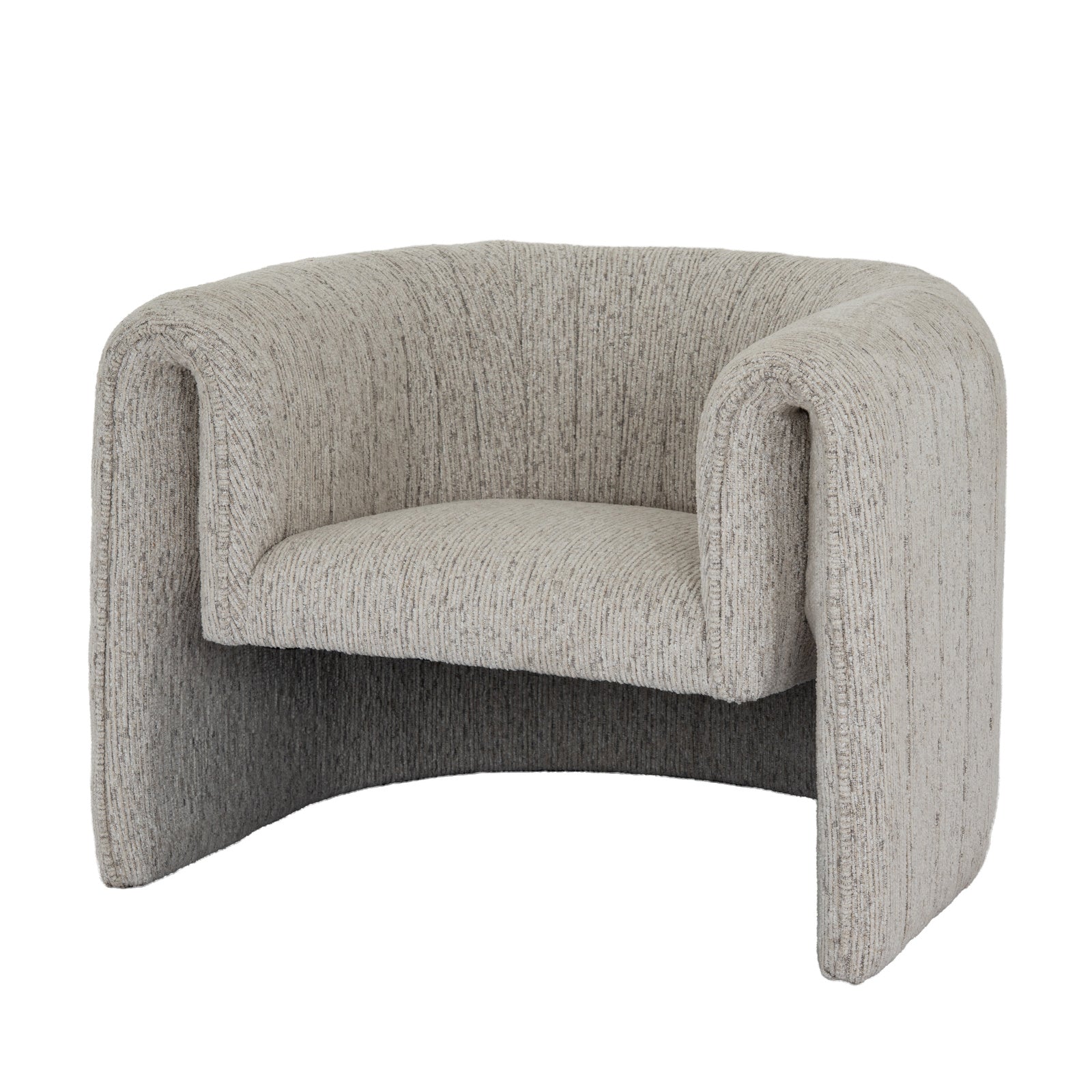
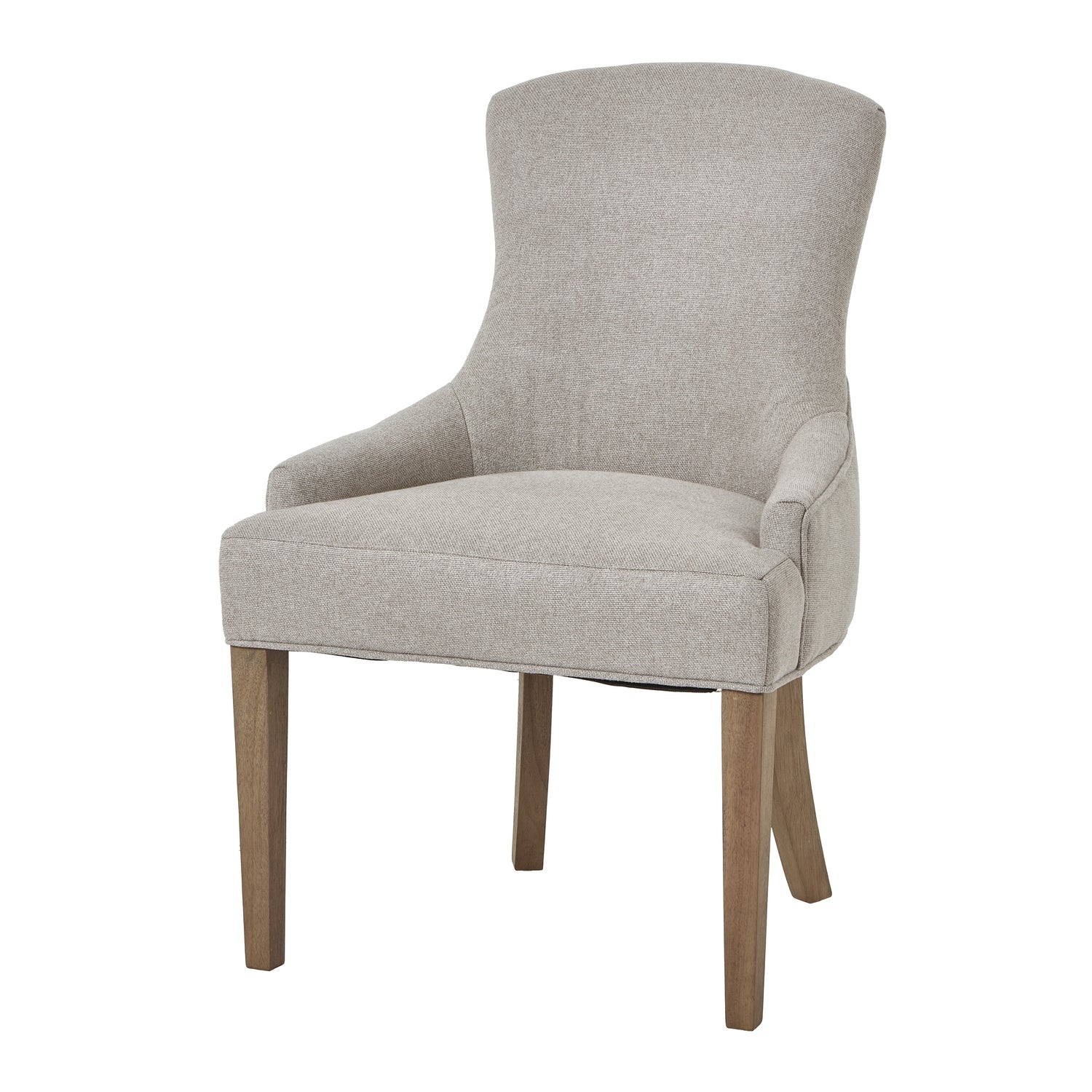
The Avia Mist Armchair from the Avia collection. Its generous cushioning and inviting silhouette create a sense of warmth, while the soft mist-toned upholstery offers a muted yet luxurious base that works seamlessly for this interior aesthetic. The gently curved arms and balanced proportions give it a poised presence, making it equally suited to a feature spot in a living, bedroom or vanity area. The upholstery’s finely woven texture adds an element of tactile organic richness, while the depth and subtle sheen of the fabric reflect changes in light, adding visual interest. The colour way works harmoniously with the warm, earthy and materially honest colour palette of this trend.
The surface objects
The coffee table, side table and any open shelving in the room should carry very little — but what they carry should be chosen with absolute care. A single handmade ceramic vessel. A stack of three books with tonally grouped spines. A small branch of dried botanicals in an unglazed pot. A candle in a natural wax, in a raw stone or simple ceramic holder. The instinct to add more should be resisted every time: these surfaces earn their beauty through restraint.
Product placement — Side Table or Accent Table
Insert a side table or nesting tables in a natural material — stone-topped, marble-topped, solid wood or a stone-and-metal combination with warm matte finish. Describe how the material speaks to the organic minimalist principle of natural honesty: the way a marble top catches light differently at different times of day, or the grain of a solid wood surface giving each piece its own unique character. Suggest styling it with a single object and leaving generous space around it.
The wall
An organic minimalist living room typically has one significant wall element — a large mirror that amplifies natural light, or a single piece of art that is large enough to hold the wall without company. The frame should be in a natural material: raw wood, warm metal, unfinished stone. The art itself should feel connected to the natural world — an abstract landscape, a botanical study, something with the textures and tones of the room's own palette.
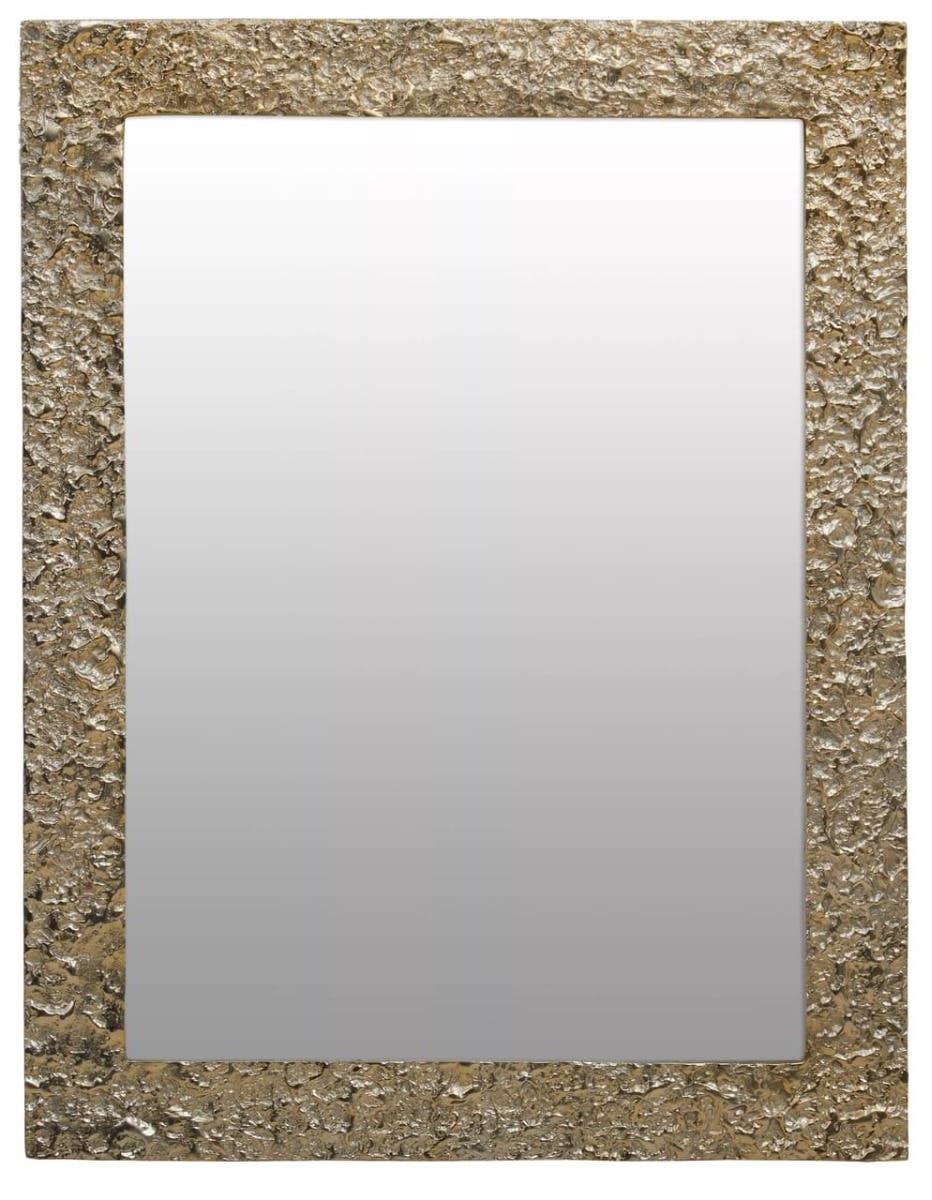
This striking wall mirror showcases a richly textured gold frame that evokes the raw elegance of natural stone and molten metal which are integral to an organic decor aesthetic. The tactile, uneven surface provides an intriguing contrast against the pristine reflective glass, amplifying the natural light that defines the aesthetic, and it introduces an object with genuine material presence. The frame's texture captures the warm tones and the size gives the space the generous, unhurried quality that organic minimalism requires.
The Bedroom
If the living room is where organic minimalism is most visible, the bedroom is where it is most felt. This is the room whose atmosphere has the most direct impact on wellbeing — the quality of sleep, the mood in which a day begins, the sense of genuine rest that a bedroom either provides or doesn't. An organic minimalist bedroom is designed around one overriding intention: to make the body slow down the moment you enter it.
The bed is the room's entire point. Choose a frame with a presence that is both restrained and beautiful — a simple headboard in warm-toned linen, a low platform in aged oak, an upholstered form in undyed natural fabric. Layer the bedding in natural fibres: linen sheets that wrinkle the way linen should, a cotton waffle throw, a heavy wool blanket folded at the foot. The layers should invite you in rather than simply look tidy.
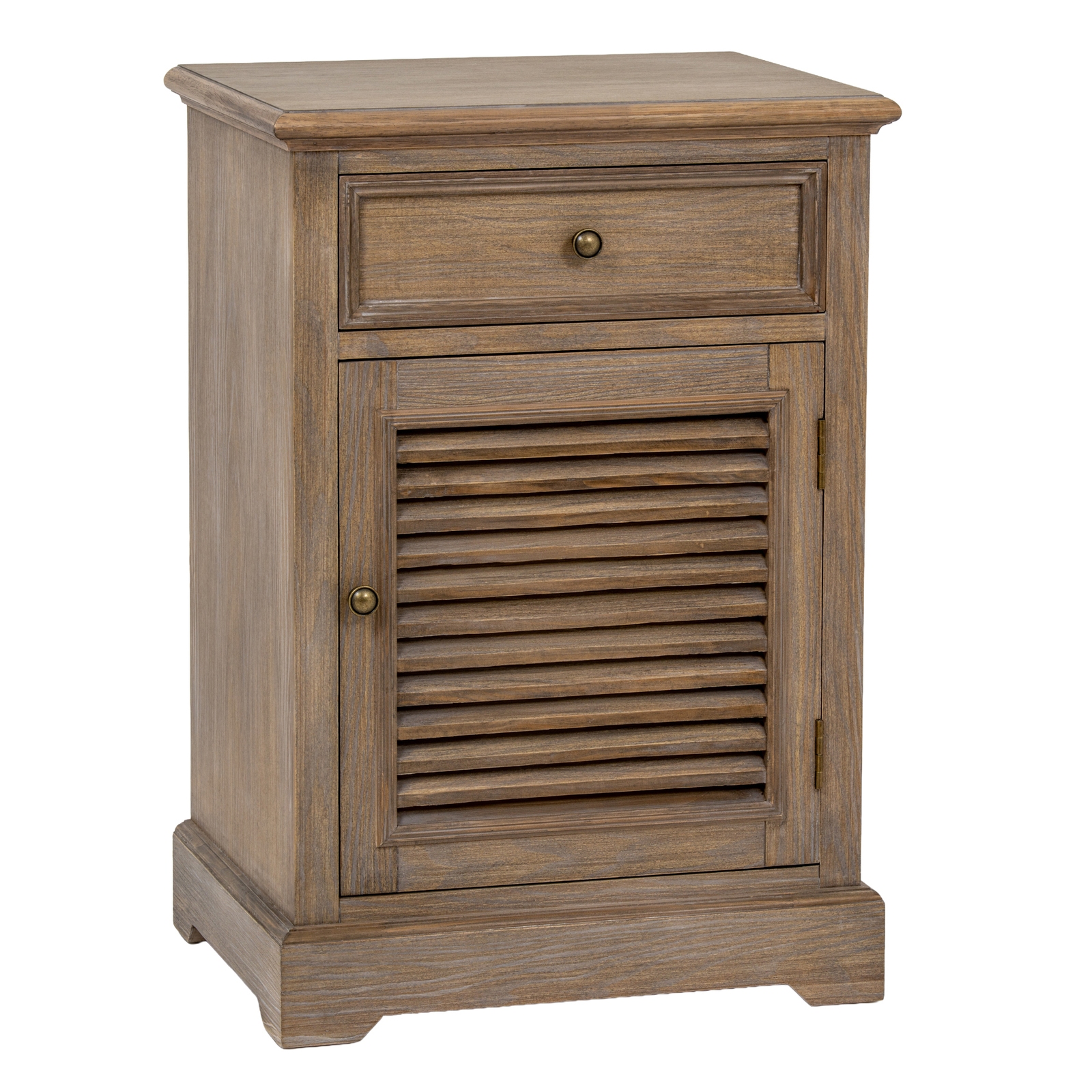
The bedside table should carry almost nothing: a lamp with a warm bulb, a single object, perhaps a plant or dried stem. The walls should be bare or nearly so — a piece of art or a mirror above a low dresser. The floor should be visible, perhaps with a natural fibre rug at the bedside that the foot lands on first thing in the morning and last thing at night. Every sensory detail matters in a bedroom, because the body experiences it at its most receptive.
The Dining Room
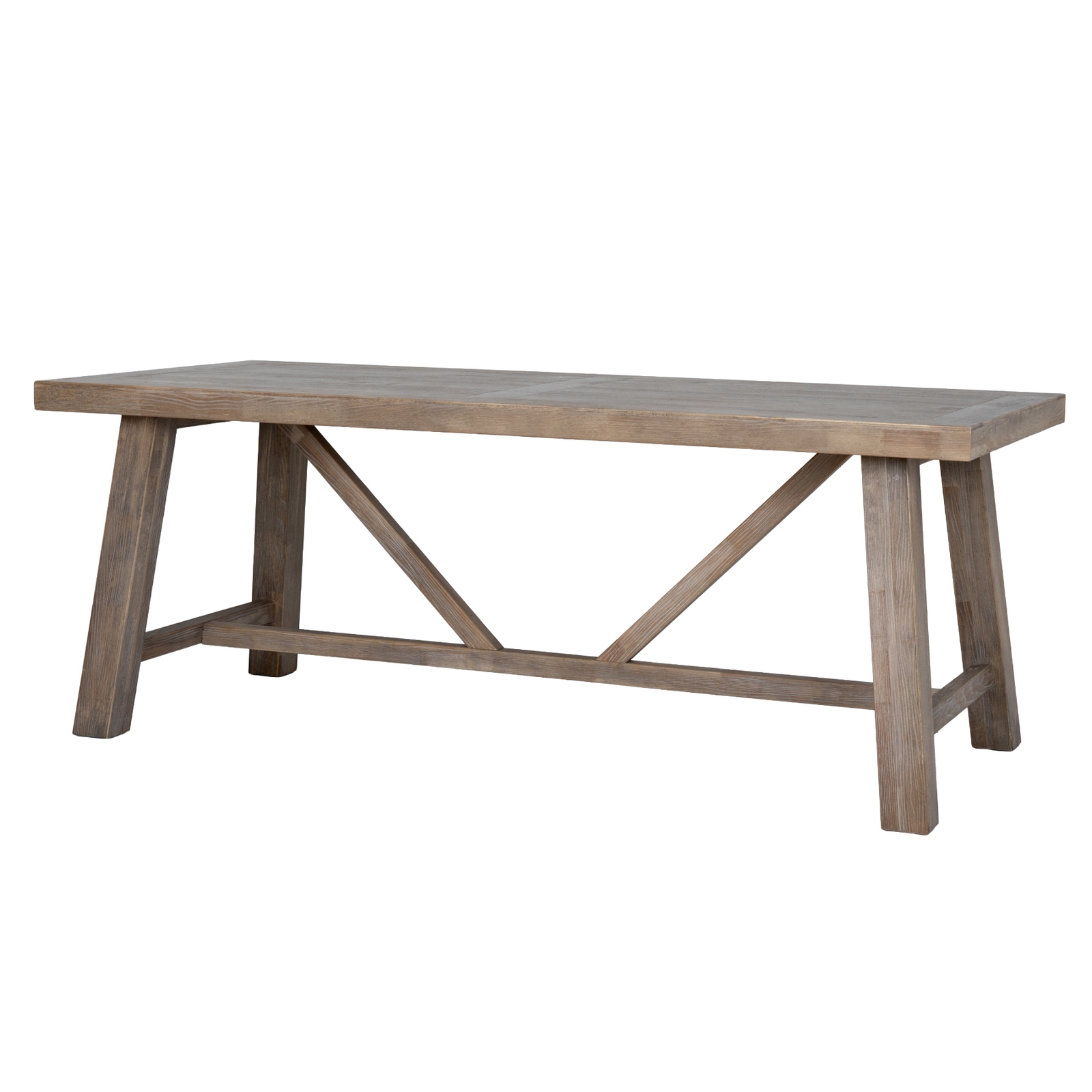
The dining table in an organic minimalist home is perhaps the most important single piece of furniture in the house — because it is both the most functional object and, when chosen well, one of the most beautiful. The trend is firmly towards solid natural materials: a live-edge oak table, a travertine or stone top, a thick slab of marble on simple legs. The table should feel like it has weight and permanence, like something that will be in the family for twenty years and look better for it.
The dining chairs should complement without matching perfectly — a slight variation in material or finish (all in wood, but different stains; all upholstered, but in slightly varied textures of the same tone) gives the table a collected rather than purchased quality. The pendant light above the table is critical: it should be in a natural material (rattan, woven fibre, raw metal, shaped stone), hang low enough to create a pool of intimate light at table level, and be the room's single most significant decorative statement.
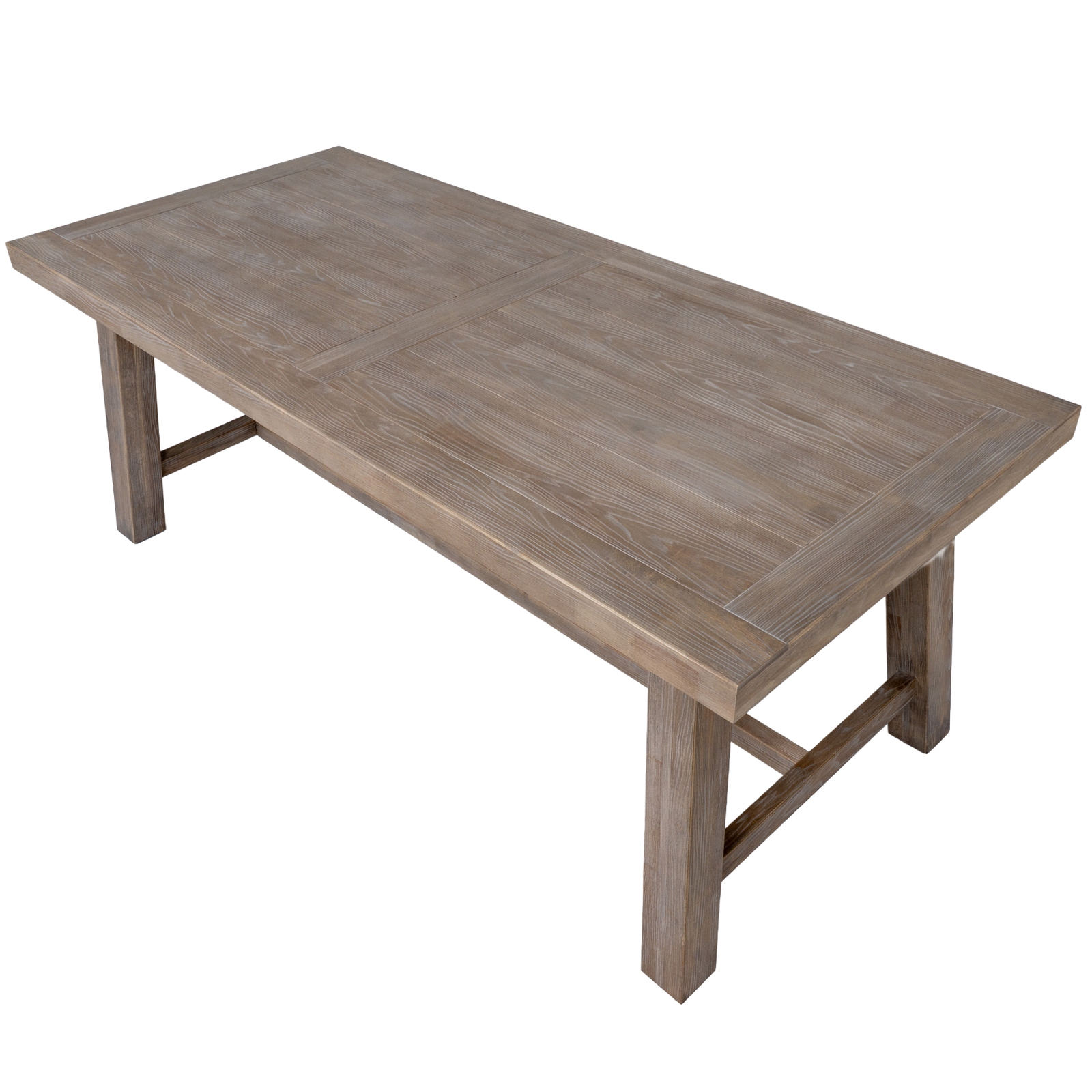
Haldon Collection Large Dining Table
The dining table itself should be dressed very simply for everyday living — a single low centrepiece object (a ceramic bowl, a stone vessel with a cutting from the garden, a cluster of candles in raw holders), a runner in natural linen or undyed cotton, and nothing more. The table's material should be allowed to do the work.
How to Transition to Organic Minimalism Without Starting Over
The intimidating thing about organic minimalism, seen in its most resolved form in the pages of a design magazine or on a beautifully curated Pinterest board, is the apparent completeness of it. Every surface seems perfectly calibrated. Every object seems inevitable. It looks as though it arrived fully formed — as though you would need to empty your home and start again to achieve anything like it.
You don't. Organic minimalism is most authentic when it evolves gradually — when pieces are acquired with care and time, when imperfections and irregularities accumulate naturally rather than being curated into place. The homes that achieve it most convincingly are almost never the ones that were designed all at once. They are the ones where the approach was committed to over months and years, with each new addition held to a consistent standard of material quality and intentionality.
The practical place to begin is not with purchasing but with removing. Spend a weekend taking everything off every horizontal surface in your home and being honest about what earns its place back. The objects that come back should be the ones you find genuinely beautiful, the ones with material richness, the ones that give you pleasure every time you notice them. Everything else goes into storage or leaves the house entirely.
Once the surfaces are edited, the remaining objects will almost certainly look better — because they will finally have the breathing space they needed. Then, gradually and without rushing, begin replacing any synthetic or inauthentic materials with natural ones. A synthetic rug replaced by a jute or wool one. A laminate side table replaced by one in solid wood or stone. A mass-produced ceramic replaced by a handmade one. Each swap is small; the cumulative effect is transformative.
Product placement — Natural Material Accent Piece for Any Room
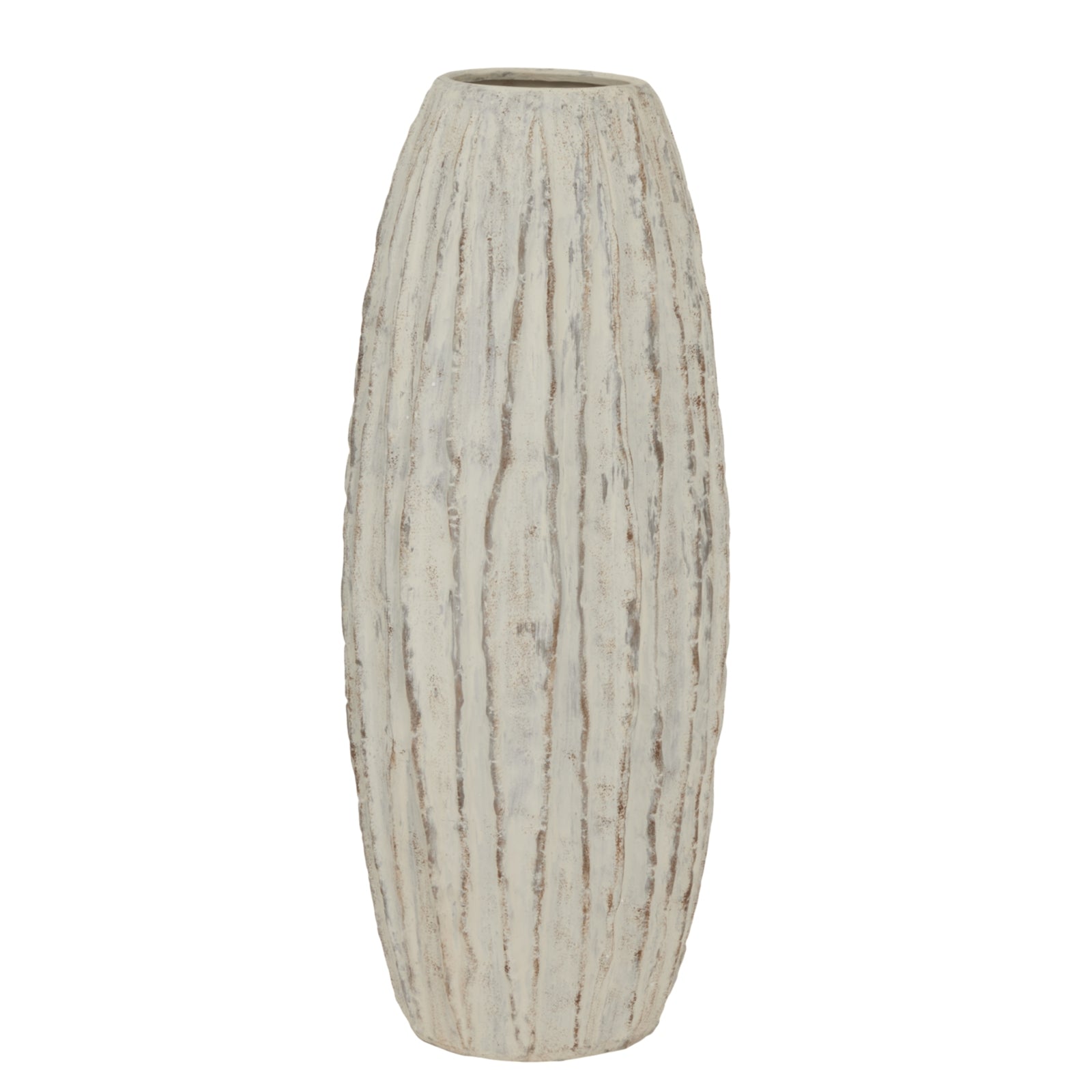
Part of the distinguished Lorenzo collection, this statement piece stands as a testament to contemporary craftsmanship, where each line and curve has been thoughtfully considered. The piece offers a strong interpretation of modern minimalism, while its substantial height makes it an ideal focal point for entrances, dining areas, or living spaces.
The one-in-one-out rule: Commit to never adding a new object to your home without removing an existing one. Over time, this discipline ensures that your possessions are in a constant state of improvement — each new acquisition raising the standard rather than simply adding to the number. It is perhaps the single most effective practice for maintaining an organic minimalist home in the long term.
Shop the Organic Minimalism Edit
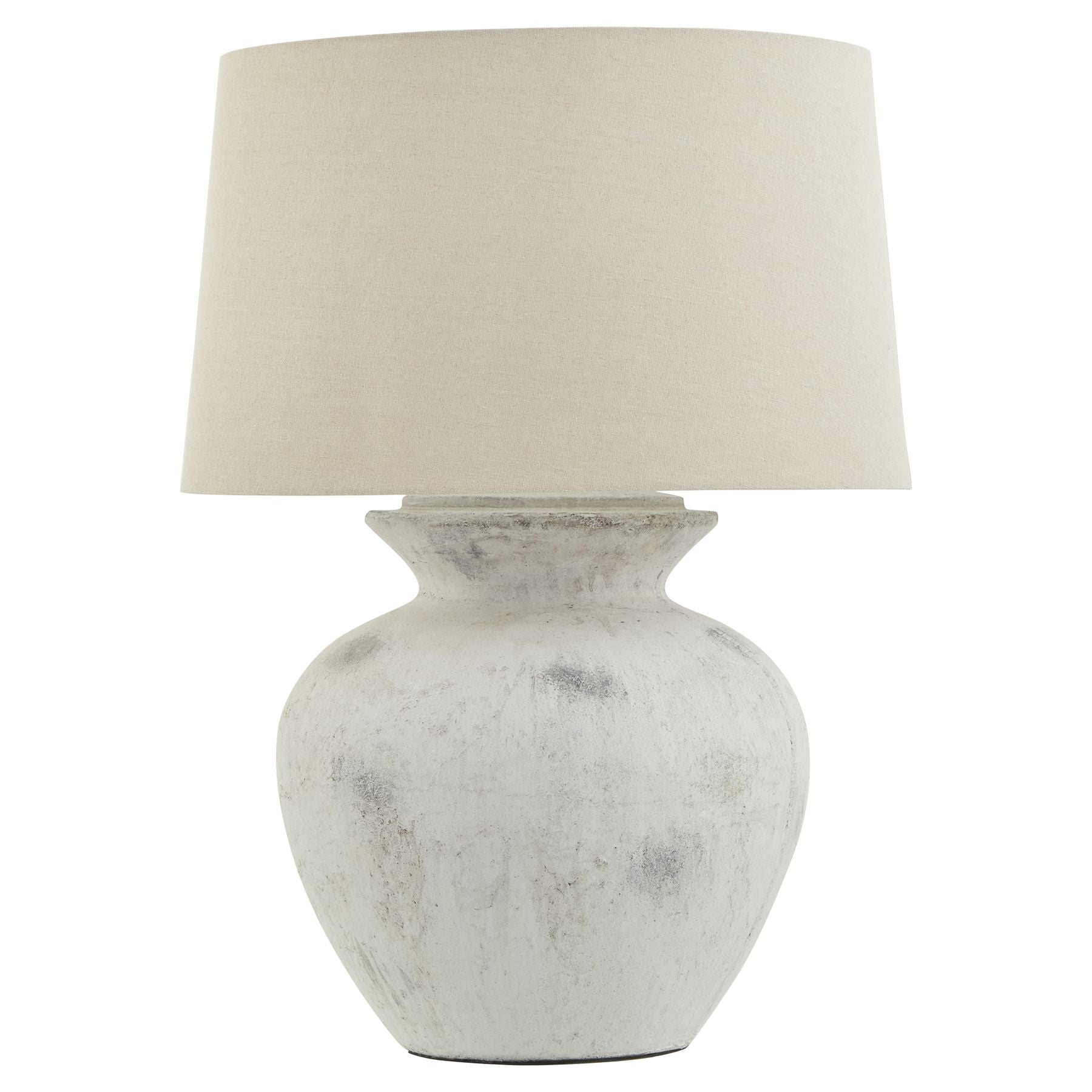
Pieces from our collections that embody the organic minimalist approach — natural materials, considered form, genuine craft.
Frequently Asked Questions
What is organic minimalism in interior design?
Organic minimalism is an approach to interior design that combines the restraint and intentionality of minimalism with the warmth, texture and natural sensitivity of organic design. It prioritises natural materials (stone, wood, linen, handmade ceramics), warm earth-toned colour palettes, and spaces that feel calm and abundant rather than empty and clinical. The defining quality of an organic minimalist home is that it feels genuinely alive — textured, warm and quietly beautiful — while containing far fewer objects than a conventionally decorated space.
How is organic minimalism different from Scandinavian minimalism?
Scandinavian minimalism tends towards cooler, lighter palettes, more architectural precision, and a design language that emphasises function above all else. Organic minimalism is warmer in every sense — in its colour palette (earthy neutrals rather than cool whites and greys), in its materials (raw, imperfect and tactile rather than smooth and precise), and in its emotional intention (a feeling of warmth and aliveness rather than clarity and efficiency). Both approaches value restraint; organic minimalism values warmth equally.
What colours are used in organic minimalism?
The organic minimalism palette is drawn from the natural world: warm stone, raw linen, pale clay, dry sand, aged oak, soft sage and deep earth. These tones are consistently warm rather than cool — even the whites in an organic minimalist home are cream or chalk rather than pure bright white. The palette typically applies lighter tones to the largest surfaces (walls, flooring, upholstery) and reserves the deeper, richer tones for smaller accents and objects.
What materials define the organic minimalist look?
Natural stone, raw and aged wood, handmade ceramics, linen and jute, limewash plaster, matte warm metals (aged brass, brushed bronze), dried and living botanicals. The consistent principle is material honesty: materials that look like what they are, that show their natural grain, imperfection and character, and that develop beauty with age rather than deteriorating. Synthetic materials and high-gloss surfaces are generally avoided in organic minimalism because they lack the sensory richness that natural materials provide.
Is organic minimalism the same as the quiet luxury trend?
They share significant common ground — both prioritise quality over quantity, natural materials over synthetic ones, and understatement over display. The key difference is that quiet luxury is primarily about social signalling through refined, expensive materials and recognisably high-end craftsmanship. Organic minimalism is less interested in status and more interested in feeling — in the way a home makes its inhabitants feel when they live in it. A quiet luxury home might use the same materials as an organic minimalist one, but with a higher emphasis on perfection and precision. Organic minimalism welcomes imperfection as part of the point.
How do I start creating an organic minimalist home?
Begin by editing rather than buying. Remove everything from your horizontal surfaces and be honest about what earns its place back — choosing only objects with genuine material beauty and personal meaning. Then, gradually replace any synthetic or inauthentic materials in your home with natural ones: a synthetic rug for a wool or jute one, a laminate surface for wood or stone, a mass-produced object for a handmade one. Each individual swap is small; over time, the cumulative effect is a home that feels fundamentally different — warmer, quieter and more alive.
Why is organic minimalism the defining interior trend of 2026?
Organic minimalism resonates so powerfully right now because it offers something that most contemporary spaces — and much of contemporary life — don't: a genuine sense of calm. After years of screen-saturated, information-dense daily experience, there is a widespread and deeply felt desire for environments that slow the body and mind down rather than accelerating them. An organic minimalist home is designed to do exactly that — through its materials, its palette, its restraint and its insistence on warmth over performance. It is, in the most straightforward possible sense, a response to how people actually want to feel when they come home.


